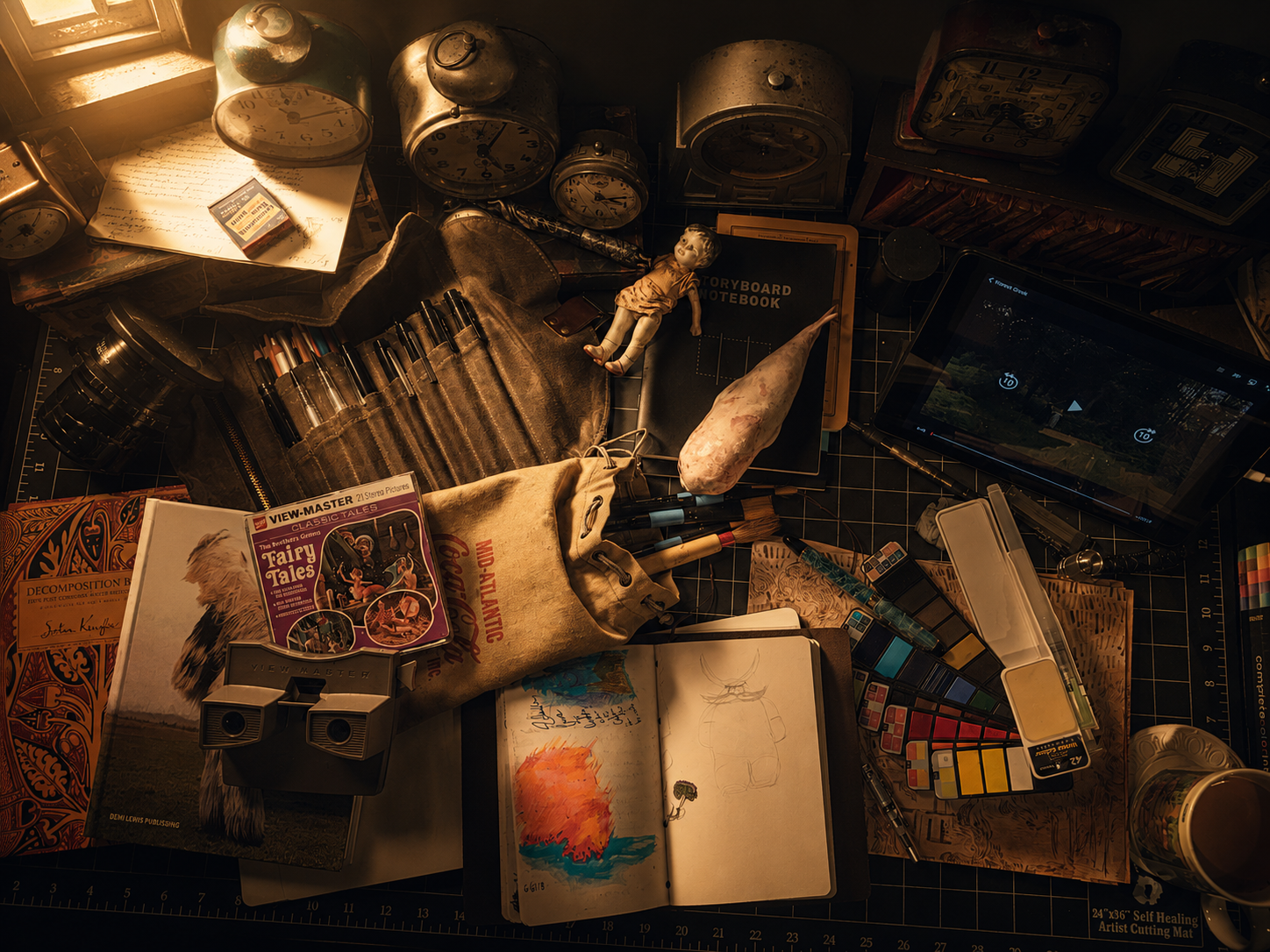
Why my work looks the way it does…
Or, still coloring for a living
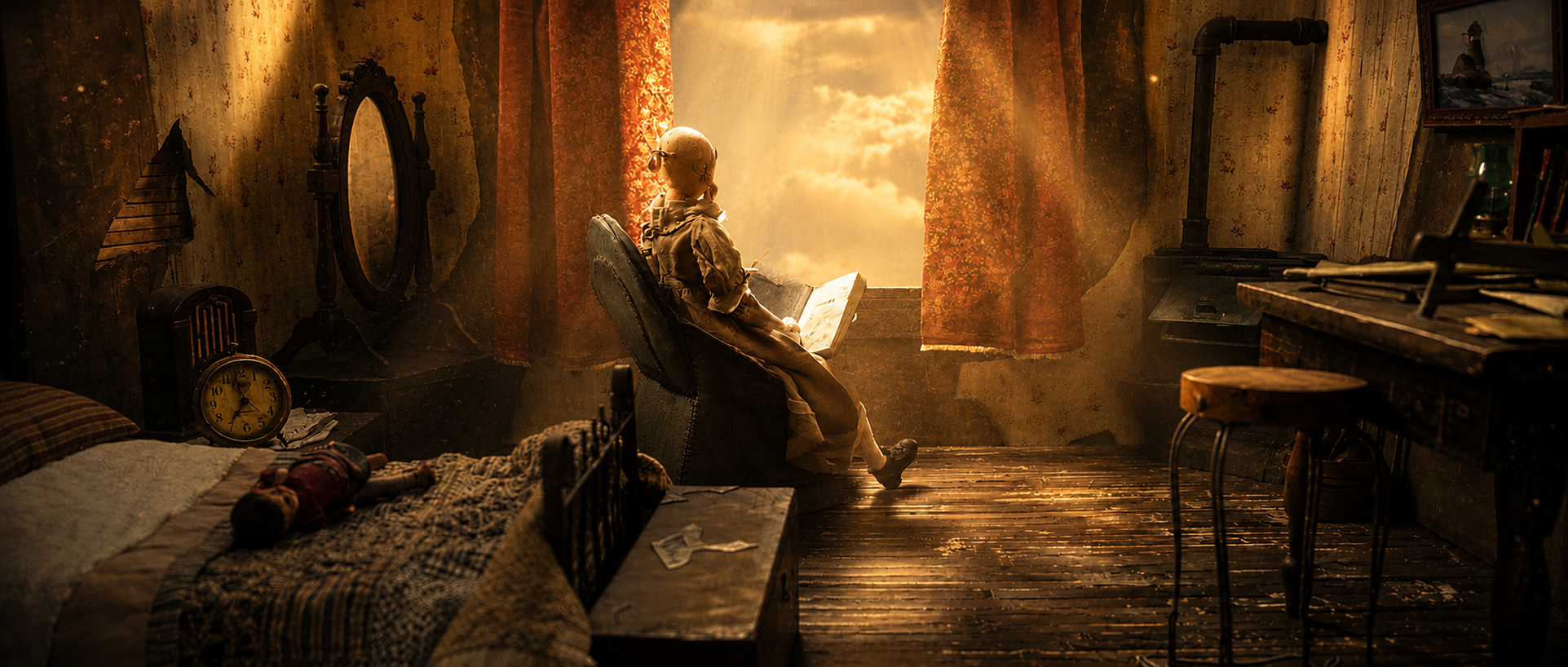
I create films, animation, and visual stories by blending handcrafted techniques with modern digital tools. My background spans graphic design, cinematography, video editing, and animation, and over the years I've learned that the best approach isn't choosing one discipline; it's knowing when each one serves the story.
Some projects call for practical puppet sets and miniature worlds. Others demand polished editing, motion graphics, or AI-assisted workflows. I'm just as comfortable building something by hand as I am using emerging technology to push an idea a little further. Every project is different, but the goal is always the same: create something that feels authentic, memorable, and serves the story.
The common thread throughout my work is thoughtful visual design, cinematic storytelling, and a willingness to use whatever tools best bring an idea to life—whether it's a technique I've refined over decades or one that didn't exist a year ago.
That fascination with handcrafted worlds didn't begin in a studio. It began much earlier.
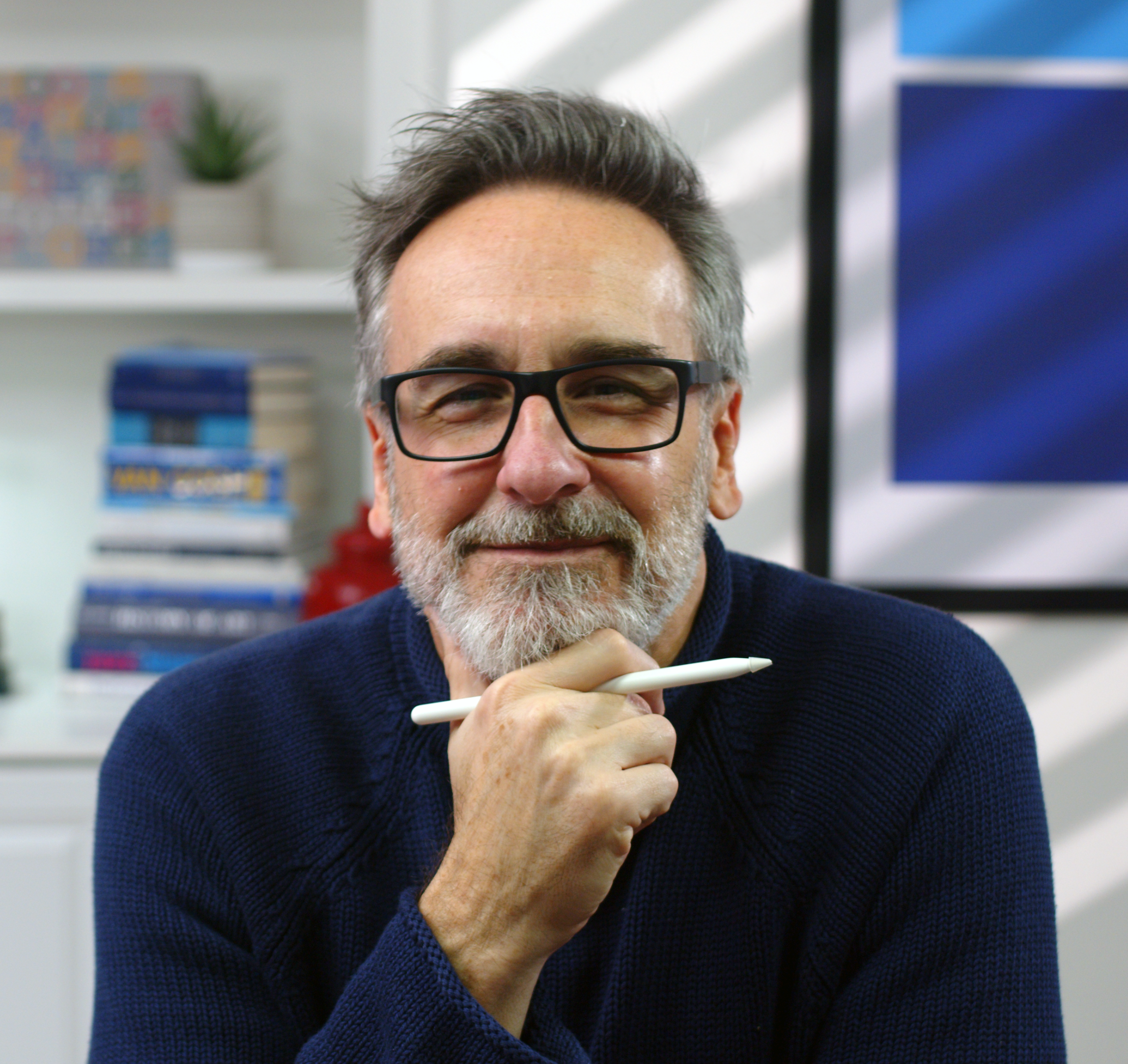
A lifetime of poorly supervised imagination
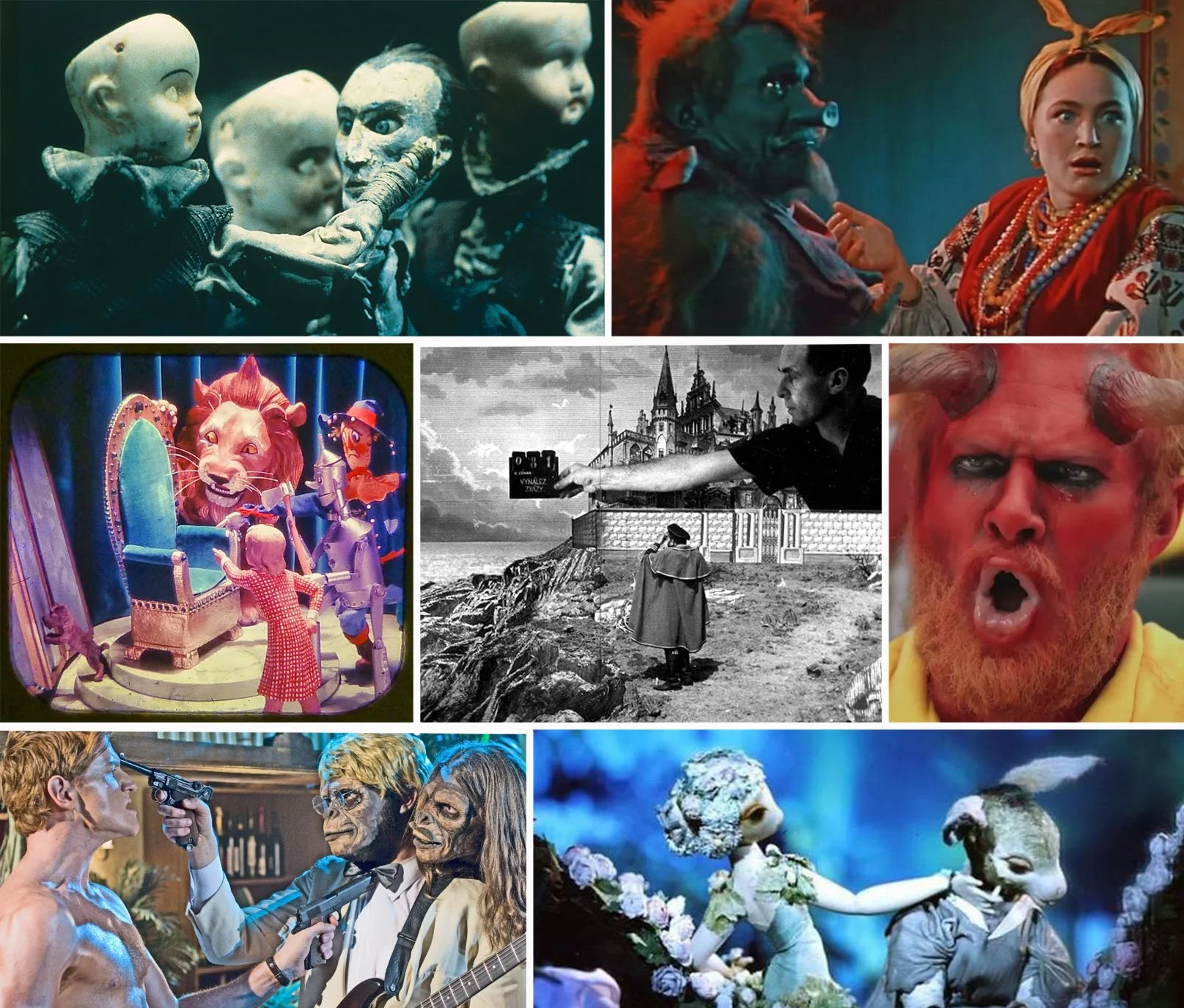
Some of my earliest memories are of studying the same handful of View-Master discs over and over again. Different from the cartoons of the '60s and '70s, those colorful miniature dioramas felt tangible; comforting, mysterious, and occasionally unsettling. They occupied a strange place between reality and dreams, and they looked unlike anything else I had ever seen.
Around that same time, without really understanding what I was seeing, I was exposed to the films of Russian fantasy director Alexander Rou: Evenings on a Farm Near Dikanka and Jack Frost (Morozko). Their worlds burned themselves into my imagination and sparked a lifelong fascination with visual storytelling that felt tactile, theatrical, and surreal.
That path eventually led me to Terry Gilliam’s Python animations, and then the pioneering stop-motion artists Ladislas Starevich, Jan Švankmajer, Jiří Trnka, Karel Zeman, and the Brothers Quay. Years later, I found the same fearless creativity in productions like The Mighty Boosh, Garth Marenghi's Darkplace, Danger 5, and the wonderfully strange universe of Adult Swim.
Those influences still shape the way I think about every project. Whether I'm building a practical puppet set, editing a film, designing motion graphics, or using AI to extend what's physically possible, I'm still chasing the same feeling I found in those tiny View-Master scenes: a world that feels handcrafted, cinematic, and just a little unexpected.
The tools have changed. The curiosity that started it all never has.